

 New
New
Thymosin Peptide Fragment
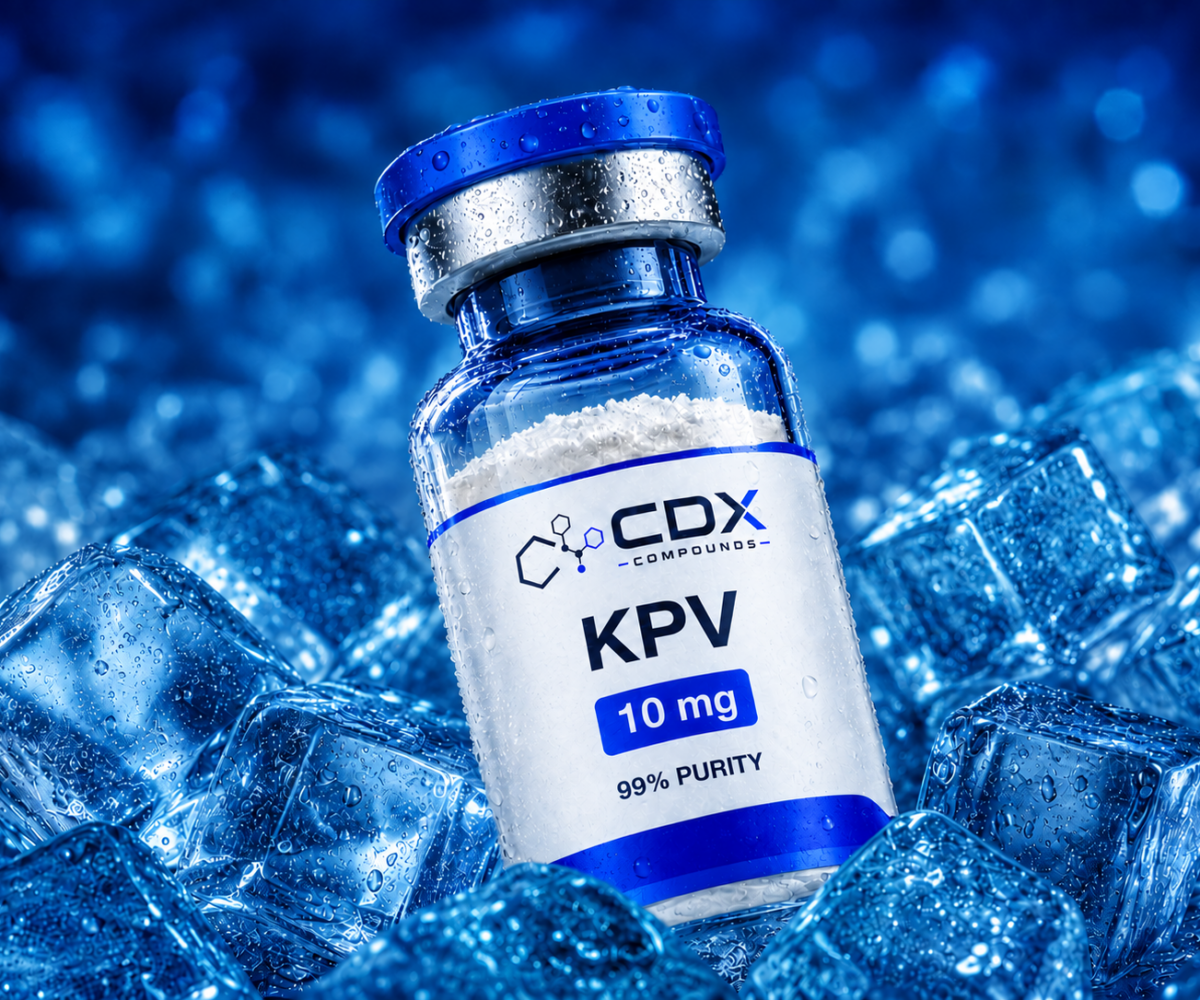
KPV
KPV is a tripeptide composed of lysine, proline, and valine. The sequence corresponds to the C-terminal region of alpha-melanocyte-stimulating hormone (α-MSH). Laboratory and preclinical investigations involving KPV have focused on...
$60.00
Research Use Only — not for human or veterinary consumption. See our Research Use Only Policy for eligibility details.
KPV is a tripeptide composed of lysine, proline, and valine. The sequence corresponds to the C-terminal region of alpha-melanocyte-stimulating hormone (α-MSH).
Laboratory and preclinical investigations involving KPV have focused on inflammatory signaling pathways, epithelial biology, cytokine responses, and peptide-transport mechanisms.
This material is supplied exclusively for laboratory research and analytical applications.
Specifications
Product Classification: Research Use Only (RUO)
Compound: KPV
Total Content: 10 mg per vial
Sequence: Lys-Pro-Val
Peptide Length: 3 amino acids
Classification: α-MSH-derived tripeptide
Form: Lyophilized research material
Packaging: Research vial
Purity: ≥99% (include only when confirmed by applicable batch COA)
Intended Use: Laboratory research and analytical purposes only
Research Applications
KPV may be used in controlled laboratory models investigating:
- NF-κB signaling
- MAPK signaling
- Cytokine pathways
- Inflammatory signaling
- Epithelial cell models
- Peptide transport
- PepT1-associated transport
- α-MSH-associated molecular pathways
Warning
FOR RESEARCH USE ONLY. NOT FOR HUMAN OR VETERINARY USE. NOT FOR HUMAN CONSUMPTION.
This product is intended solely for qualified laboratory research and analytical applications.
Scientific Report
Abstract
KPV (Lys-Pro-Val) corresponds to the C-terminal tripeptide sequence of α-MSH. Experimental investigations have examined its activity in cellular models involving inflammatory signaling, epithelial pathways, cytokine activity, and peptide transport.
Mechanistic Pathways
NF-κB Signaling
KPV has been investigated experimentally in models involving NF-κB-associated signaling.
Research focus: Cellular signaling associated with experimental inflammatory responses.
MAPK Signaling
MAPK pathways represent another area investigated in KPV research.
Research focus: Intracellular signaling under controlled laboratory conditions.
Epithelial Models
KPV has been examined using epithelial and intestinal experimental systems.
Research focus: Epithelial cellular signaling.
Peptide Transport
Experimental work has investigated KPV in relation to peptide transport mechanisms, including PepT1-associated transport.
Research focus: Molecular transport and cellular uptake mechanisms.
Research Profile
Compound: KPV
Sequence: Lys-Pro-Val
Classification: α-MSH-derived tripeptide
Primary Research Areas: Cellular signaling / epithelial biology / peptide transport
Research Setting: Laboratory and preclinical models
Research Parameters
Experimental concentration, exposure duration, assay conditions, and controls depend on the specific research system and endpoint under investigation.
No instructions for human or veterinary use are provided.
Research Highlights
- NF-κB-associated signaling
- MAPK pathway research
- Cytokine-response models
- Epithelial biology
- PepT1-associated transport
- α-MSH-associated molecular research
Conclusion
KPV provides a compact molecular research tool for investigating selected α-MSH-associated pathways, particularly inflammatory signaling, epithelial biology, and peptide-transport mechanisms.
Research Use Only — not for human or veterinary consumption.
Please review our Research Use Only Policy for eligibility details.
Related Compounds
You May Also Be Researching
New